Sunday, September 4, 2011

Packing for a trip to the Reno Air Races

I will be adding to this post in the coming days as I go nearly crazy trying to decide, what to pack, how to pack and what gear to bring along on a trip to Reno for the Air Races.  It will be hot, lots of people, lots of walking, lots of cool airplanes, lots of speed.  And did I say hot and lots of people?  Last year it was right at 100 degrees and about 150,000 thousand people.

September 26, 2011;  O.k., so it's a little later than I had intended it to be for this update but after all the events at the race, I wasn't even sure if I wanted to keep doing this especially about something as trivial as bags, packing and gear.  But a few weeks have passed, the horrific events of the race are settling in and it feels like life, at least for some, is looking normal again.  For those of whom that it is not, my deepest and most sincere condolences.  I won't report on the events here for the primary reason that I wasn't at the airfield when it happened and enough has been said in the news.  I, and a good friend of mine, had chosen to leave the airfield just before that race was to commence and because we did we were fifty miles away in an old ghost town taking photographs.  I am happy to say that no one that we knew and no one from the Merlins Magic Crew were involved or hurt.  So, having said that I'll get back to where I was with the trivial matter of bags, packing and gear.


Gear:  As far as what gear to bring that wasn't too hard.  I knew there would be lots of fast moving objects and most of them would be kind of far away.  This Air Force jet for example is traveling around 550mph and while only a fraction before this photo was taken it was level and 300 yards away, by the time I started firing it was going nearly vertical with the afterburners on.  So my Nikkor 70-300 zoomed all the way out was needed.  As far as camera bodies go I really like to travel light but for an event like this the "big guns" are needed for speed as well as full frame sensors for the best possible resolving power.  That meant the Nikon D700 had to have a place in the bag.

Knowing also that there would be lots of people, crowded walkways and airplanes parked in the "pits" with mechanics working on engines in tight spaces something on the wide side for a lens would be important so a Nikkor 24mm and 35mm also found a home in the bag.

I had planned as well to go out into the desert for some ghost town exploration and knew that some macro photography would also come into play so a Nikkor 105mm macro lens also needed a place in the bag.

Of course there's the customary batteries, compact flash cards, cables, filters, lens hoods, cell phone, iPad, gum, magazines and power bars.  Oh, and a tripod.  Plus clothes for four days.

All this was complicated by the fact that we would be flying to Reno on a Dash 8-400.  Nice airplane (a little slow) but not much overhead storage so I knew my roll-on bag (Rick Steves ~ 21" Roll-a-board http://www.ricksteves.com/) would get checked at the gate.  Knowing that I didn't want any expensive gear in that bag I broke down my tripod and put into the roll-on, batteries, cables and other stuff I didn't need access to in flight went into the roll-on and only my camera body and lenes stayed with me in a Crumpler 7million dollar home http://www.crumpler.com/US/ (funny name for a bag) and only ended up weighing about 15 pounds (still heavier than I like to lug around but for the most part it rode on my roll-on until we boarded.)

One of the things that was important to me was to not haul around a big camera bag, either on my back or over my shoulder.  Like I said, it's hot and there's lots of people and it is an all day affair.  So for me a "Black Rapid" shoulder sling http://www.blackrapid.com/product/camera-strap/rs-7/ proved to be just the right thing.  That with my camera hanging on it and an extra lens in one cargo pocket of my shorts, battery, card and cleaning cloth in the other pocket and I was set.  Hands Free and nothing hanging around my neck or on my back.

For the rest of the trip, out in the desert and visiting ghost towns, I just kept everything in the Crumpler in the the back of the rental car.

Tragic events not withstanding, the trip was good.  It took some time to adjust to what had happened and it happened on the second day of a four day trip.  Since the races were called off we decided to make the best of it and spent our last two days out shooting in Nevada's beautiful high desert and the Sierra Nevada Mountains.


Above is Richard Massey, Artist in Residence at the Fort Churchill State Park.  Wonderful fellow who was kind enough to give us a personal tour of the park and the old Bucklin Mansion.

The ruins to the right are two of the remaining buildings at Ft. Churchill.


More photos from this trip can be seen at either; http://www.tomcollinsphotography.com/Travel/Nevada/19132364_2dgrjz#1489964033_9vrZN9v or at;  http://www.flickr.com/photos/tomcollinsphoto/

At summers end

It's Labor Day weekend and our short summer here in the Pacific Northwest comes to an end.  Actually we're having the best part of summer just now.  For us it hasn't been the best year for weather but compared to the rest of the country we can be considered lucky. 

Photography wise it's been a tough time to get motivated, up until now, because the summer was so dreary, wet and cool.  But now the sun has finally come out and everyones flower gardens are in full bloom although they wont be around long, so hence this post to say get out and get what you can.  And with the beautiful fall colors just around the corner, these flower gardens won't last much longer.

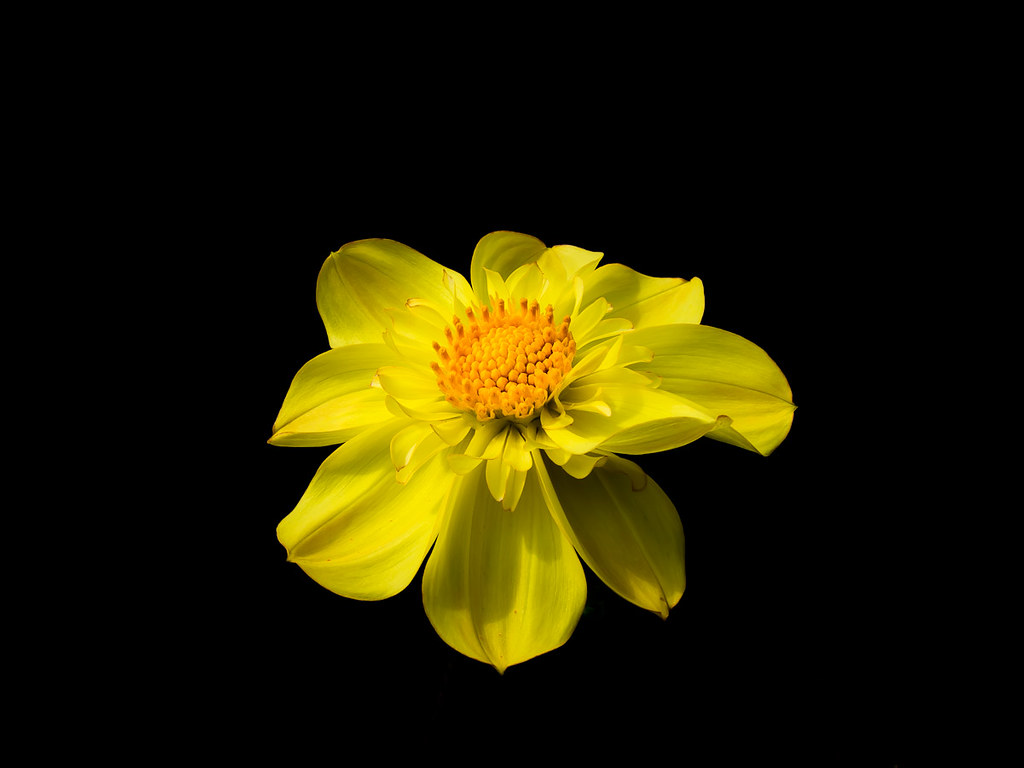
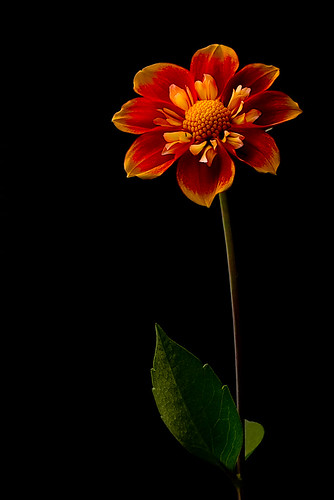
These photos of a variety of flowers shot at Point Defiance Park in Tacoma, Washington were shot in the middle of the day with the sun high in the sky.  I was using both a Canon S95 (handheld) and a 
Leica X1 mounted on a tripod and using a polarizer.

The black backgrounds were achieved using a large piece of black poster-board and handheld behind the flowers.  Because the sun was so bright the originals don't show quite this black.  They're actually a little more gray, but thanks to Lightroom and the little "black" slider, a little exposure adjustment and some cropping, I was able to get the nice, deep blacks you see here.

Part of what makes photography fun, for me, is access.  Easy accessibility is key to happy shooting for me.  I don't mind working for a shot, a hike, a kayak trip, asking for permission, deep and intense planning, but when I get one of those ever elusive ideas of something I want to take pictures of, the easier it is to get to, the more assured I am of going to get it.  I'm not lazy, well maybe a little, but I am busy.   

I was so happy with these that I went to a fabric store, bought a yard of black cotton/poly material that was dark enough to not see through, would wash easily and didn't wrinkly to badly.  I used some adhesive tape designed for holding fabric together and made a pocket at the top of the long end big enough so I could insert my walking stick into and be able to use it as a way of holding the backdrop behind a subject and still be able to release my shutter.  The whole set up cost around $11, folds up nicely and doesn't take any valuable space in the camera bag.  Just another easy and inexpensive way to control a setting without actually doing anything adverse or changing mother nature in any way.

Happy shooting.

Monday, July 19, 2010

Snap-shooter vs. Hobbyist vs. Professional vs. Amateur

I know it’s not important to many people but to me titles help define things.They can have a negative effect by doing the same thing and boxing it in. At times I even want to title a photograph I’ve taken, but I resist that for fear of restricting the vision of the viewer.  But somehow knowing, by title definition, what I think I am with regards to photography, helps me understand my own vision about what I’m doing.

I love reading the vast collection of books and essays written on photography and by photographers, as well as, looking through the collections of books of photographs by other photographers.  Of those there are several that I particularly enjoy and I find myself reading them over again several times.  One such book is Mike Johnston's ( www.theonlinephotographer.com, )The Empirical Photographer in a section titled The Photographers’ Menagerie – A Typology of Photographers, he list types as “The Snapshooter”, “The Hobbyist”, “The Professional”, “The Amateur” and “The Artist”, who’s description, by the way, is noted in Mikes book as; “The Artist is the Amateur who succeeds”.

The reason I mention this references is to make some distinction about where I think I am in Mike’s typology.  Of course for the full understanding of Mike’s descriptions, his book is a must read.  In any event, I believe myself to fall somewhere in between the “Snapshooter” and the “Amateur”.  For some time, because of my addiction to gear, I thought I might actually be a “Hobbyist”, but my need for more stuff seems to have, finally, tapered off.  And my wife is really happy about that.

As a snapshooter, to quote Mike, “He exists in a state of grace; his work is pure, undimmed by expectation, undirected by intention, and undiminished by the imposition of ideas.  His pictures are as immediate, as uncontrived, and as purely photographic in their nature as it is possible for photographs to be.  The snapshooter is supposedly guileless, unrestricted, neither clotted up with tradition nor weighted down by the dulling strictures of the intellect – not only unrepressed, but irrepressible, and free; and the perfect snapshot is a masterpiece of effortlessness, innocence, natural grace, and disingenuousness – nothing less, some people feel, than the ultimate photographic expression.”

As an amateur, to quote Mike, “The term has a derogatory connotation today, implying someone who is unskilled or unprofessional; but the eighteenth-century sense of the word, meaning someone who is motivated by love rather than by tawdry greed, someone whose commitment is un-compromised and whose work remains unsullied by mundane realities, is also well known.” So, although I’ve been down a few different paths in trying to understand who I am as a photographer and what, if anything, I’m intended to do with my photos, I believe that I have found my peace in being a happy snapshot-shooter, with some decent gear and a love for my hobby.  And that makes me happy.